
Why design alone isn’t enough for a high-converting website
O P I N I O NWhen someone lands on your website, their response is immediate and instinctive. Before they read a word, their mind is instantly registering the overall appearance; the colours, the imagery, the spacing, the tone of language, and how quickly they understand what the site is about.
Often without realising it, they’re asking themselves:
Does this feel considered?
Does this feel like a business I trust?
Do I want to stay here?
It’s that simple.
Imagery
Imagery has a vital role to play in creating a great first impression. It cannot be underestimated when it comes to keeping your audience engaged.
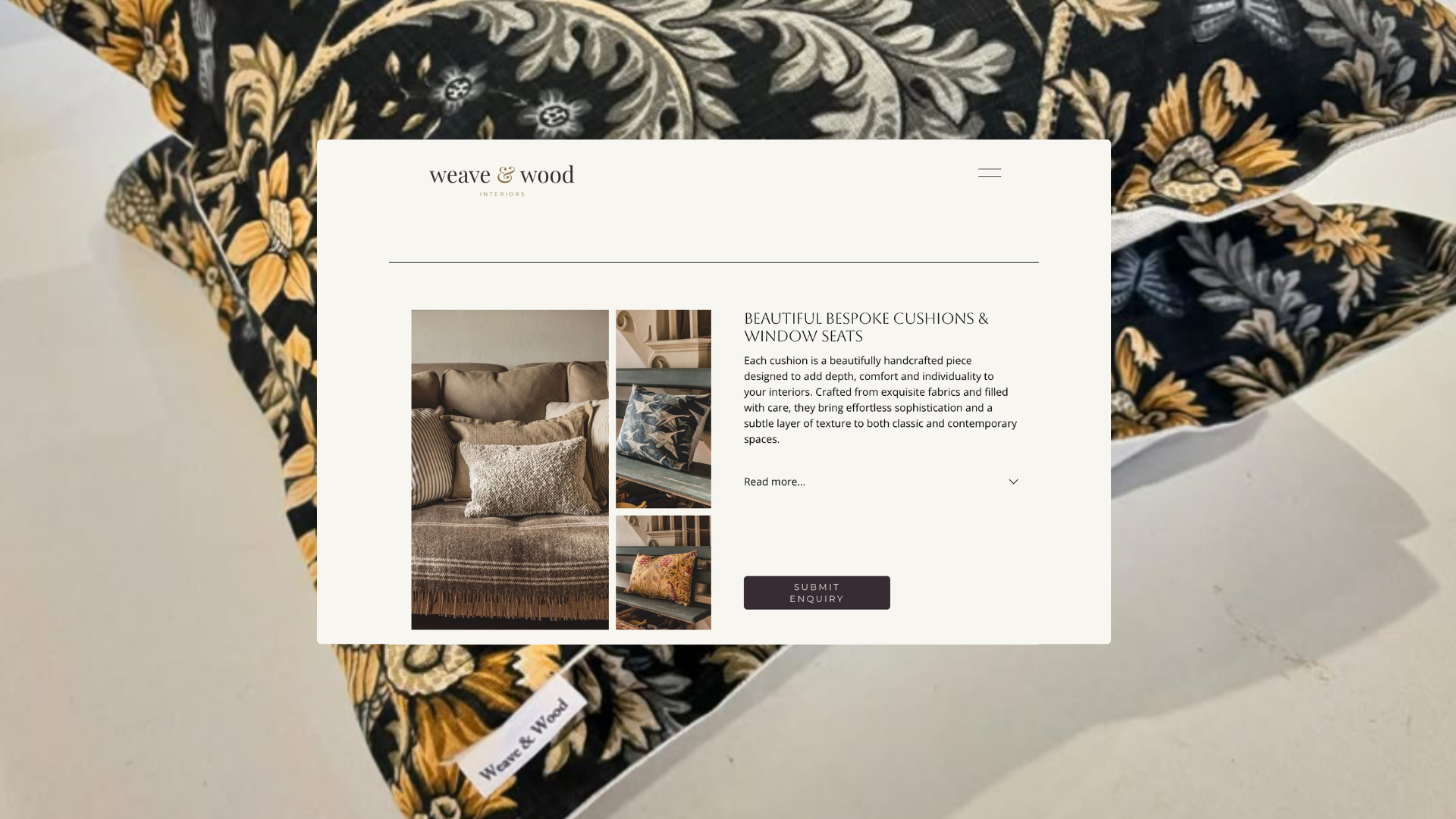
Imagery played a key role in my work with Weave & Wood Interiors www.weaveandwood.co.uk, an interior design client, when we worked together on a custom web build, email list set up and lead magnet creation.
Weave & Wood Interiors, a stone’s throw from me in Somerset, elevates country homes through timeless handmade interior designs including bespoke curtains, roman blinds and other home furnishings. Their work is slow, skilled and intentional, shaped by the environment, carefully selected fabrics and a dedication to the quality of their craft. This website needed to reflect that same care and quality - not just in how it looked, but in how it feels to the user as they gently move through each page.
So, I was delighted when my client told me they’d decided to use Rachel Collins www.rachelcollinsphotography.co.uk for their brand photoshoot during the website planning phase. Rachel’s style of photography was the perfect fit for this brand, and the overall result is a fine example of how craft, design and photography can work together to communicate the ethos of a brand, in an instant.
I knew the quality of Rachel’s photography was going to make it a dream for me to build a website for Weave & Wood that was going to bring a sense of calm and clarity for the user. I chose simple layouts, generous spacing, elegant typography and a colour palette drawn from the client’s rural surroundings and existing brand colours. Nothing decorative for the sake of it! Every design choice was made to support the craft itself; simple, natural and quality-led.
Each image complimented this beautifully and allowed the craftsmanship to speak for itself: the quality of fabric, the intention behind every stitch, and how each piece sits naturally within a home. Together, the design and photography created a sense of reassurance and quiet confidence the moment you arrive on the website.
The Brief: a website that feels natural and enduring
As a designer, creating a website that feels natural and enduring meant:
creating a steady rhythm across the site so visitors can move through the content without friction or overwhelm, making it easier for them to stay longer, understand the offer, and take action.
Page layouts that guide the eye gently so nothing feels forced or confusing, and key information lands exactly where it should, helping potential clients absorb what matters without having to work for it.
Clear navigation that answers questions so users don’t have to hunt for information, reducing ‘drop-offs’ and creating a smoother path from first click to enquiry.
A pace that reflects the quality and speed of the craft itself so the website feels aligned with the service being offered — considered, thoughtful, and not rushed, building trust before a word is even spoken.
A website that is easy to manage for the owner upon completion of the project so updates don’t feel like a chore, content stays current, and the business isn’t reliant on ongoing support for simple changes.
Rachel’s observational approach to photography, with particular attention on the light, space and atmosphere supported this brief perfectly. The images didn’t compete with the design; they worked within it, reinforcing the same sense of ease and balance.
Why photography directly impacts website design
Squarespace’s strength lies in its simplicity. Clean layouts, generous white space and understated typography make it an excellent platform for refined brands and an accessible one for business owners to manage once the site is live.
But this simplicity also means there’s nowhere to hide.
When photography is inconsistent, overly styled or disconnected from the brand, it immediately unsettles the design. As a designer, you’re forced to compensate by tightening layouts, adding visual noise using animations, or breaking the calm of the page just to make things work.
On this project, the alignment between imagery and design meant the website could be built calmly and confidently, without overworking the structure.
Alignment over trends
When selecting imagery for the website design, the decision was never about following trends. Every image was chosen to create a cohesive flow and aesthetic appeal that truly represented this timeless brand.
As the website designer, I considered:
Colour and texture - how images would sit together across a page
Typography - ensuring the fonts and imagery were a perfect blend
Quality and detail - balancing wider scenes with close-ups to demonstrate the quality of the craft.
Consistency - maintaining a cohesive feel across every page
Navigation and flow - using imagery to support clear communication and to build trust.
This level of attention ensures the website doesn’t just function, it creates a clear, confident overall brand that feels elevated and aligned throughout.
Choosing a Photographer
Not every photographer is the right fit for every website.
A website is a key part of how your business presents itself online, so it’s important to work with a photographer who understands how your images will be used, not just how they look in isolation.
For this project, Rachel’s rural, craft-led photography style complemented the elegant, restrained website design. Images were composed with the craft and quality in mind, layout and image resolutions were provided in different sizes to support both desktop and mobile viewing, and the desire to create continuity from page to page rather than contrast.
These considerations made a lasting difference to the final website.
What imagery a Squarespace website actually needs
One of the most common mistakes I see is investing in photography without a clear plan for how it will support the website.
A strong website image library usually includes:
wide, atmospheric images that set the tone
detail shots that quietly demonstrate quality
contextual images showing work in real environments
consistency in orientation and framing
As the brand owner, try to plan your photography and website design together, so that the final result feels cohesive because the visuals and structure are aligned from the start.
Building trust in your brand
Great photography doesn’t need to persuade, it reassures – and a great website design does the same. Together, they create a sense of credibility, helping visitors to feel confident before you ever speak to them.
A well-designed website:
reflects the pace and values of the business
answers questions clearly and calmly
removes friction from the user journey
gently guides visitors towards an enquiry or purchase
Website design is always a collaborative effort
The best websites I’ve worked on are collaborative. They begin with a client who values the planning phase, supported by a photographer who has a similar style and who observes and respects the work that they capture, and finally this is all brought together through web design that prioritises clarity, balance and ease of use.
The Weave & Wood project reinforced how powerful that shared approach can be, and for brands rooted in craft, environment and quality, that cohesion makes all the difference.
Want help refining your website?
If you would like a Squarespace website that feels fully aligned with your expertise, I can help. We would start by planning your site structure, key messaging, and user journey so every page has a clear purpose and flow. From there, I design or refine your site so it not only looks polished, but works hard for your business behind the scenes. This could be for a full website design or a refresh of an existing site. At the end of the project, you’ll have a website that feels like you, builds trust instantly, and confidently converts the clicks into enquiries.